

MS Community College Leadership Academy begins 2026-27 class at MCC
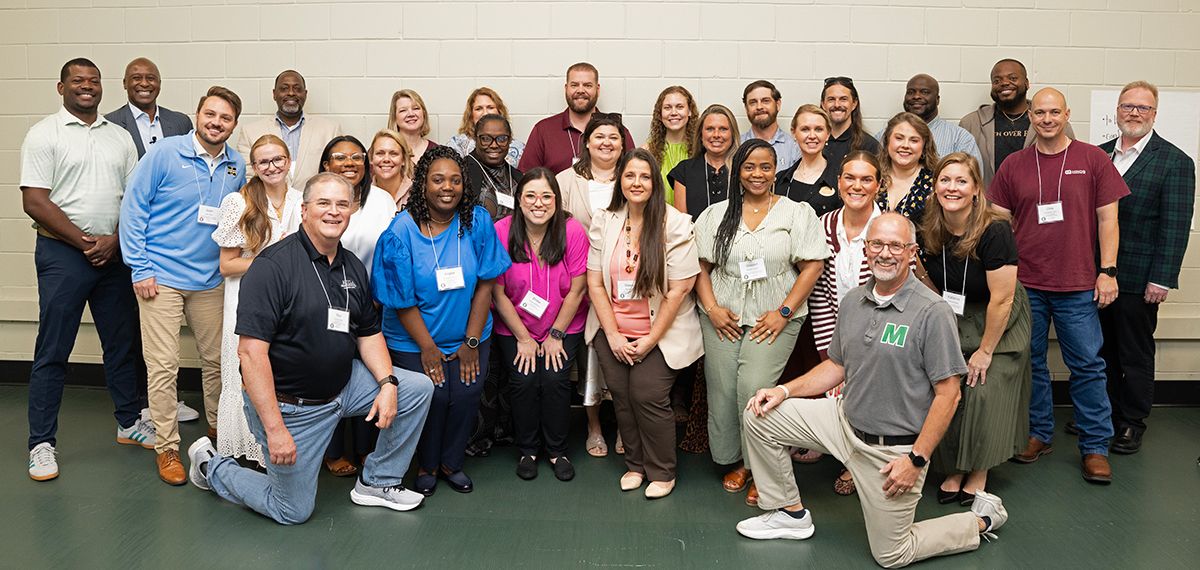
Future community college leaders from across Mississippi gathered at Meridian Community College with a shared goal: to learn, connect and grow in service to their students, campuses, and communities.
MCC hosted the opening session of the Mississippi Community College Leadership Academy’s 2026-27 class, welcoming selected faculty and staff from Mississippi’s community colleges for the start of a yearlong leadership development program.
The academy, which is a joint initiative of the Mississippi Community College Foundation and the Stennis Institute at Mississippi State University, is designed to help build the next generation of leaders for Mississippi’s community college system. Participants are chosen by their institutions because they have shown leadership ability and promise.
Dr. Paul Miller, executive director of MCCLA, leads and facilitates the academy. He noted the program is not about turning participants into leaders overnight. Instead, it gives them tools, relationships, and experiences that can help them continue to grow.
“These participants have already been identified as leaders,” Dr. Miller said. “The academy gives them an opportunity to grow, build relationships, and prepare for greater service to their institutions.”
The roster for the 2026 MCCLA participants include Dr. Tolernisa Butler, Coahoma Community College; Stacy Fells Jr., Copiah-Lincoln Community College; Anna Burns Clay, East Central Community College; Brandi Atkinson and Kantrina Barker, East Mississippi Community College; Emiko Hemleben and Chris Gunn, Hinds Community College; Katherine Ellard, Holmes Community College; Adam Denton and Steven West, Itawamba Community College; Lauren Johnson and Brad Smith, Jones College; Will Nathan and Mitch Brantley, Meridian Community College; Yolanda Brown, Mississippi Community College Board; Courtney Simmons and Kimberly Youngman, Mississippi Delta Community College; Renee Box and Justin Mills, Mississippi Gulf Coast Community College; Emma Grace Allen, Ivey Devine, and Melanie Jennings, Mississippi State University; Asia Duren and Jessica Harpole, Mississippi University for Women; Jillian Guy and Kim Harris, Northeast Mississippi Community College; Dr. Angela Dortch and Laura Maples, Northwest Community College; Dr. Katerria Grice and Rosalyn Vaughn, Pearl River Community College; Megan Ivy Jones, Southwest Community College; Dr. Paul Miller, MCCF; and Dr. John Harper, Stennis Institute/MSU.
The program includes in-person sessions, virtual check-ins, book studies, group work, leadership presentations and an action-plan project. Participants also hear from community college presidents, statewide leaders and others who have insight into the challenges and opportunities facing higher education in Mississippi.
Dr. Miller said one of the most important parts of the academy is what happens after each session ends.
“Leadership development is not just about the event,” he said. “It is about what participants do with what they learn when they return to their campuses.”
During the opening session at MCC, participants began building relationships with peers from other colleges. They also took part in activities designed to help them better understand themselves and others as leaders.
MCC President Dr. Tom Huebner welcomed the group to campus and said the College was proud to host leaders from across the state.
The academy also gives participants a chance to learn from people who have served in leadership roles across the state’s community college system. Past participants said those connections often last long after the program ends.
One former participant, Dr. Chad Graham, who serves MCC as the dean of academic affairs, said the value of the academy came not only from the books and discussions, but also from hearing directly from presidents and senior leaders who have faced the same kinds of challenges community colleges face every day.
The academy’s action-plan project also gives participants a way to make a real difference on their own campuses. At MCC, Dr. Graham noted one past project led to changes in the academic suspension appeal process. The updated process made communication clearer, added more student support and helped connect students with resources such as tutoring, laptop loans and success coaching.
That project continues helping students today.
For current participants, the academy offers a chance to see leadership beyond their own daily roles. Will Nathan, associate vice president and chief technology officer at MCC, said the program is an investment in personal growth and a way to better understand the many parts of college leadership. Mitch Brantley, chair of the MCC Communication and Fine Arts division and guitar instructor, is also a member of this new class.
For Dr. Miller, the goal is simple: help strong leaders become even stronger.
“The event itself is not what makes leadership real,” Miller said. “It is what you do with it.”
Visit meridiancc.edu to learn more.