

AirCare representatives share flight nursing insights with MCC students
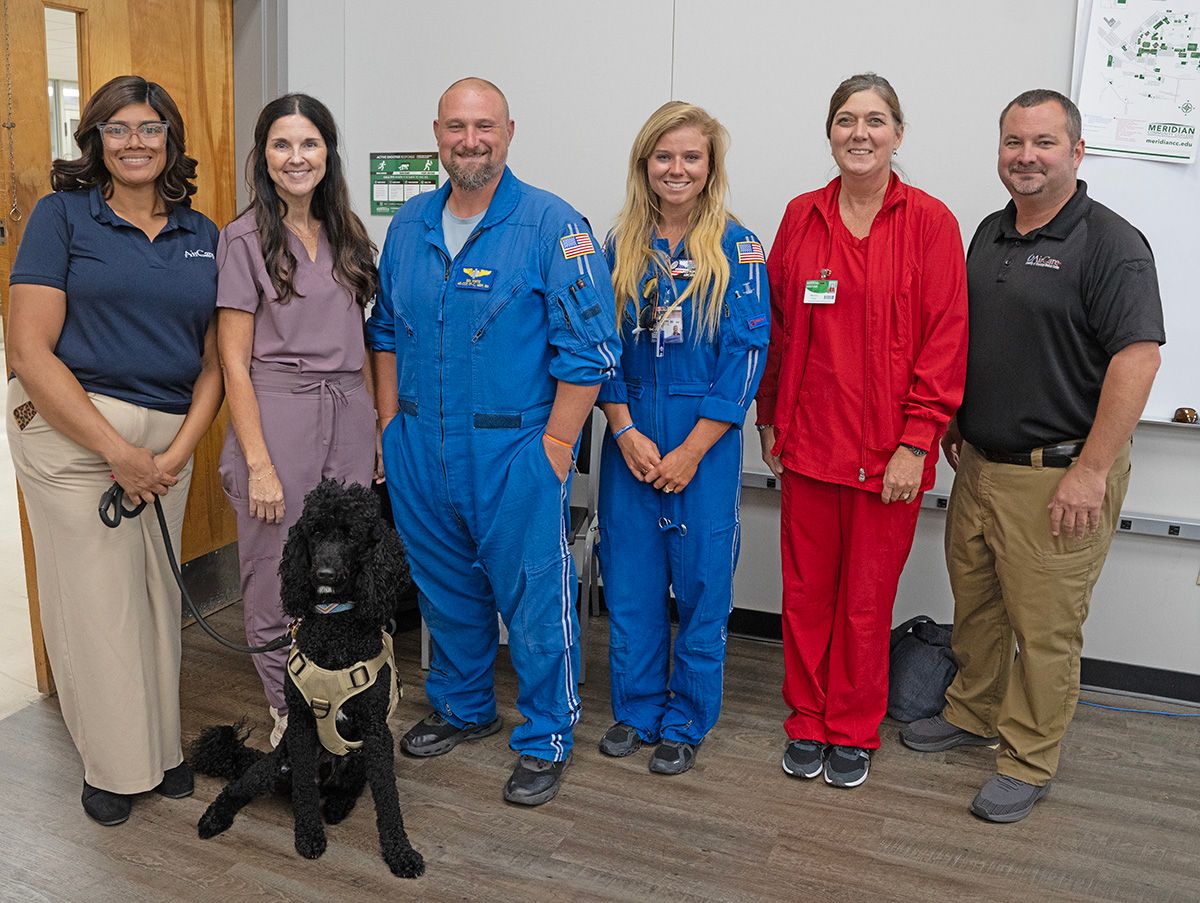
The helicopter may get the attention, but AirCare representatives told Meridian Community College nursing students the work inside it depends on experience, judgment and the ability to care for patients in high-pressure situations.
AirCare is part of the Mississippi Center for Emergency Services at the University of Mississippi Medical Center. It was established in 1996 to provide critical care transport for patients of all ages.
Representatives from AirCare, including Kawanna McCormick, health systems operations manager; Ben White, critical care paramedic; Ally Westrope, flight nurse; and Don Moore, base supervisor for Meridian and critical care medic, recently visited MCC’s Associate Degree Nursing Program to give students a closer look at critical care transport and the path to a career in flight nursing.
AirCare is part of Global Medical Response and serves hospitals across Mississippi, including rural facilities that may need help moving critically ill or injured patients to a higher level of care. The representatives explained that flight crews often become an important resource for smaller hospitals when patients need specialized treatment elsewhere.
For students interested in that career path, the message was clear: graduation is only the beginning.
AirCare requires nurses to have at least three years of professional experience before applying for a flight position. Experience in emergency rooms and intensive care units can be especially valuable, though the speakers encouraged students to build broad skills in a variety of settings, Moore noted.
They also encouraged students to consider rural hospitals, where nurses may have more opportunities to make decisions independently and care for a wide range of patients.
Because flight nursing jobs are highly competitive, additional certifications and specialized training can also help applicants stand out.
Moore said preparation starts before students ever submit a job application.
Clinical rotations, the representatives said, can serve as an informal job interview. The nurses, physicians, respiratory therapists and other health care workers students meet during clinicals may remember how they worked, treated patients and interacted with others.
Professionalism, teamwork and reputation can matter just as much as technical skill when employers begin making hiring decisions.
Students also heard about the realities of working on a medical flight crew. AirCare employees may work 16- or 24-hour shifts, with periods of downtime between calls. Other shifts can bring several patient transports in a row.
Safety is built into the schedule and the work itself. Representatives discussed required rest periods, fatigue management and weather conditions that can keep an aircraft grounded. Thunderstorms and icing are among the major concerns for helicopter crews.
When a flight is possible, the aircraft functions much like a small intensive care unit. Crews carry medications, equipment and tools that allow them to monitor and treat critically ill patients while they are being transported.
AirCare has bases in Meridian, Columbus and Greenwood, giving crews access to much of Mississippi and nearby medical centers in other states. The service has also added fixed-wing transport, allowing patients to be transported over longer distances.
Joining the AirCare staff on the MCC campus was Aero, one of GMR’s therapy dogs. GMR’s therapy dogs are specifically trained to support first responders.
For more information, visit meridiancc.edu/nursing.