

Beyond the label: MCC speakers share stories of disability, recovery, inclusion
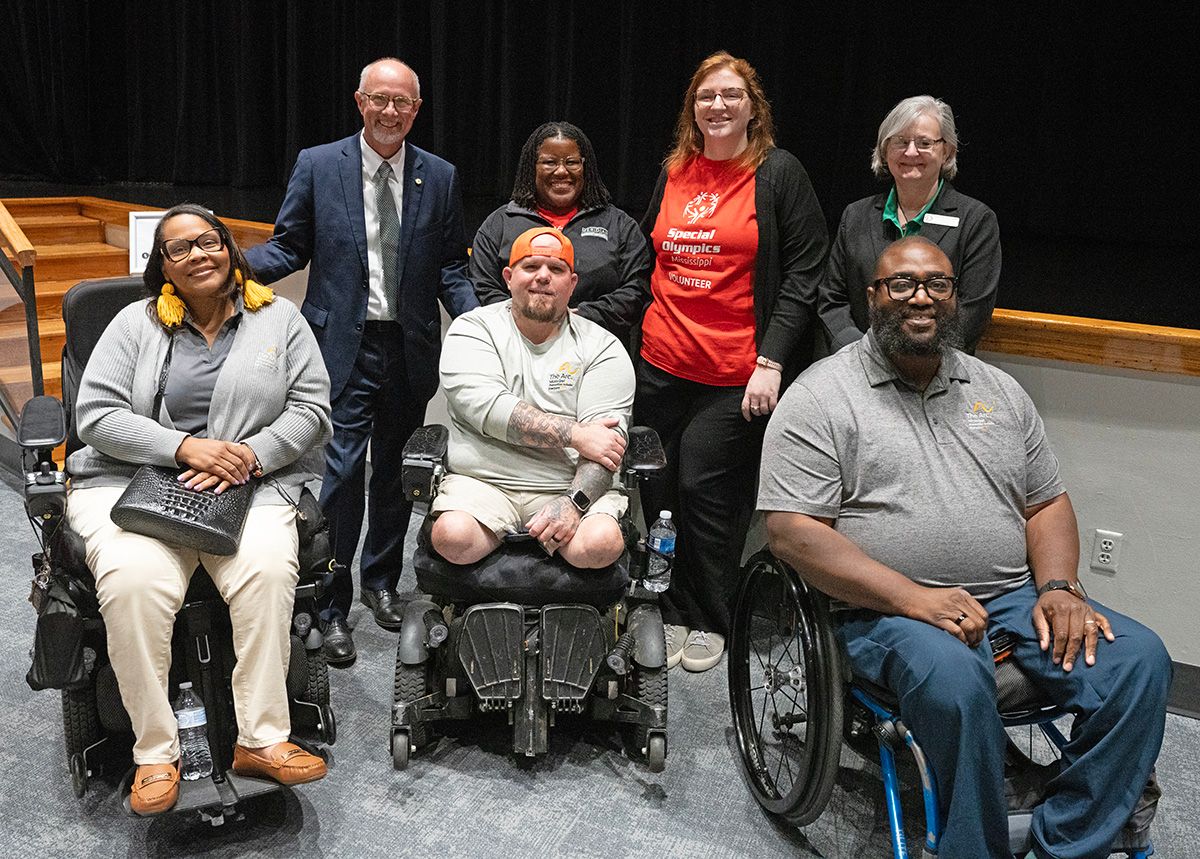
For Dr. Dwight Owens, inclusion can be as simple as a conversation in a parking lot.
When a boy approached to watch him get into his vehicle, the child’s mother tried to stop him, worried he would offend Dr. Owens. Instead, Dr. Owens welcomed his questions and showed him how he transferred from his wheelchair.
The encounter offered a lesson Dr. Owens brought to Meridian Community College: People with disabilities have stories worth sharing.
Dr. Owens joined Ishaunna Gully and David Hale for L(able)d, a program hosted by MCC’s Student Affairs. The speakers, who have paraplegia, discussed the experiences that shaped their lives and challenged students to look beyond a disability.
Jeanette Howell, MCC’s director of advising, welcomed students, faculty, and staff to the program, which focused on inclusion, personal choices, and support.
Dr. Owens, a former teacher and football coach, was paralyzed in a 2005 crash involving a drunken driver. After about a year in the hospital, he began building a life that includes speaking, disability advocacy, marriage, and fatherhood.
He now works with people adjusting to new injuries, helping them address concerns about independence, relationships and their futures.
“We just want to be included,” Dr. Owens said.
Gully shared her experience surviving domestic violence. She described a relationship that became controlling, then dangerous as she tried to leave. A shooting in 2002 left her paralyzed.
Recovery required more than medical care. Gully said she sought mental health treatment to address trauma and become more present for her young son. She now helps others recognize controlling behavior and understand their worth.
She urged students to look beneath behavior they might be quick to judge.
“Sometimes, what goes on in the house needs to be talked about,” Gully said.
Hale spoke about addiction, depression, and the work of rebuilding his life after a 2002 crash. He acknowledged driving while impaired, speeding, and failing to wear a seat belt.
His recovery took years. After leaving school with a ninth-grade education, Hale earned his GED, continued through graduate studies and became a provisionally licensed counselor.
“Stop following. Start leading,” Hale told students.
He also reminded the audience that disabilities and emotional struggles are not always visible.
Throughout the program, the speakers returned to a shared message: Learn someone’s story before making assumptions, offer support, and make room for others to participate.
Visit meridiancc.edu for more information.