

Hill: Turning grief into guidance for fellow caregivers
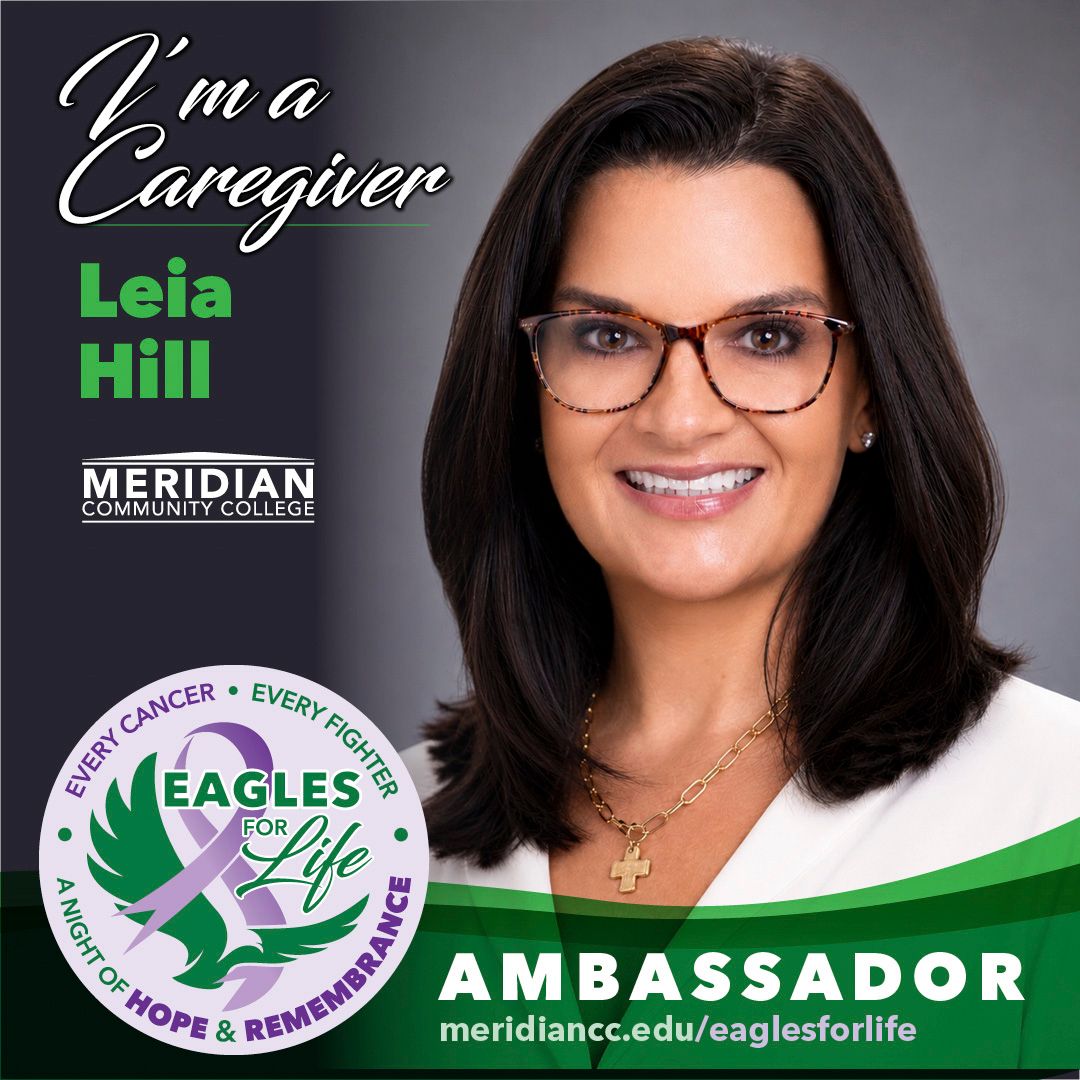 For Dr. Leia Hill, caregiving is love in action.
It is measured in medications and appointments, long drives, and difficult decisions. But it is also found in quiet moments, unexpected kindness, and the choice to keep showing up for someone you love.
More than a year after losing her husband, Adrian, to pancreatic cancer, Dr. Hill is sharing their story to encourage other caregivers and remind them they do not have to walk this journey alone.
Dr. Hill serves as chief of staff and vice president of institutional advancement and operations at Meridian Community College and as executive director of the MCC Foundation. Later this month, she will also serve as a caregiver ambassador for Eagles for Life, an event set for Saturday, Sept. 26, from 6 to 9:30 p.m. at the MCC soccer field and track.
Eagles for Life grew out of MCC's former Race for Life and Street Strut for Breast Cancer events and expanded the mission to include all types of cancer. The event will celebrate cancer survivors, honor those still fighting, recognize caregivers, and remember loved ones lost to cancer.
For Dr. Hill, the evening’s purpose is deeply personal. “Adrian was an exceptional man, a devoted father and someone who spent his life caring for others. The day after his 50th birthday, doctors discovered the mass,” she said.
“The day we found out, I felt it through my whole body, and I was immediately terrified,” she said.
Adrian underwent a Whipple procedure followed by intensive chemotherapy. When standard treatments stopped working, the couple traveled to the Mayo Clinic in Jacksonville, Florida, every week for six months so he could participate in a clinical trial.
They fought for 27 months.
Dr. Hill managed medications, appointments, travel, and lab results while trying to carry hope for both of them. She also worked to protect their three children, who were only 13, 10, and 5 when Adrian was diagnosed.
“I pushed down my own fears to make sure Adrian felt safe, comfortable, and fiercely loved every single day,” she said. “It was the hardest thing I have ever done.”
Early in Adrian’s illness, someone told Hill that the most important job she would ever have would be helping her husband die. Although the words were painful, she took them seriously.
Adrian had always been the caregiver and protector in their family. When the time came, Dr. Hill stepped into that role for him. After more than two years of treatment, they made the heartbreaking decision to stop fighting the disease and focus instead on comfort, peace, and the time they had left together.
Throughout their journey, Dr. Hill learned that hope does not always mean believing everything will turn out as planned. Sometimes, hope is found in one more day together, a small victory, a shared laugh or the people who refuse to let you walk alone.
Dr. Hill’s mother helped keep the children’s lives steady. Her sister, a registered nurse, guided the family through medical decisions. Family, friends, coworkers, community members, and oncology teams surrounded them with constant support.
“They held me up so I could be strong enough to be there for him,” Hill said. “We were held together by a circle of constant, selfless love.”
Even during the darkest season, there was joy in the quiet moments, reaching for each other when they were afraid, watching their children find happiness, and recognizing the grace shown to their family by others.
Losing Adrian changed Dr. Hill’s understanding of strength and what matters most.
“Real strength is not about controlling the outcome, because you cannot,” she said. “It is about showing up with unconditional love through the impossible. The way you love people is the only thing that lasts.”
Her advice to caregivers is to accept help. Let people bring meals. Let family care for the children. Lean on those with medical knowledge. Most importantly, offer yourself grace on the days when the weight feels unbearable.
“Being a caregiver is a heavy, life-altering weight, but it is also the highest honor you will ever carry,” Dr. Hill said. “Focus on bringing comfort, dignity and love to every moment you have together.”
Through Hope Takes Flight, Hill hopes caregivers will feel seen, supported and surrounded by a community that understands their sacrifices.
Her family’s journey taught her that even when cancer changes everything, it cannot erase love. And even in the midst of grief, hope can still take flight.
To learn more about Eagles for Life, visit meridiancc.edu/eaglesforlife.